How to File a Roof
Insurance Claim in Mississippi
Filing a roof insurance claim in Mississippi starts with a professional damage inspection, not a phone call to your insurer. Get an independent, documented assessment first, then file the claim with that report in hand — homeowners who call their insurance company before documenting the damage themselves are far more likely to end up disputing a settlement that undervalues the real scope of the repair.
If a recent storm damaged your roof and you’re not sure where to start with your insurance company, here’s the full process, step by step.
What Roof Damage Does Homeowner’s Insurance Actually Cover?
Most standard Mississippi homeowner’s policies cover roof damage caused by a “covered peril” — typically wind, hail, falling trees or debris, and fire. This is the damage category storms produce, and it’s usually covered without much dispute once the damage is properly documented.
What’s generally not covered:
- Gradual wear and aging (a 22-year-old roof that finally fails isn’t storm damage, even if a storm was the final straw)
- Damage from lack of maintenance
- Pre-existing damage that existed before the policy took effect
This distinction matters because it’s exactly where insurance companies push back. An adjuster who can attribute damage to “wear” rather than “storm” will often try to, since it shifts a repair cost from the insurer to the homeowner. This is the single biggest reason to have your own independent, dated inspection report — it creates a record showing the damage pattern is consistent with a specific storm event, not years of gradual deterioration.
Step 1: Get an Independent Roof Inspection First
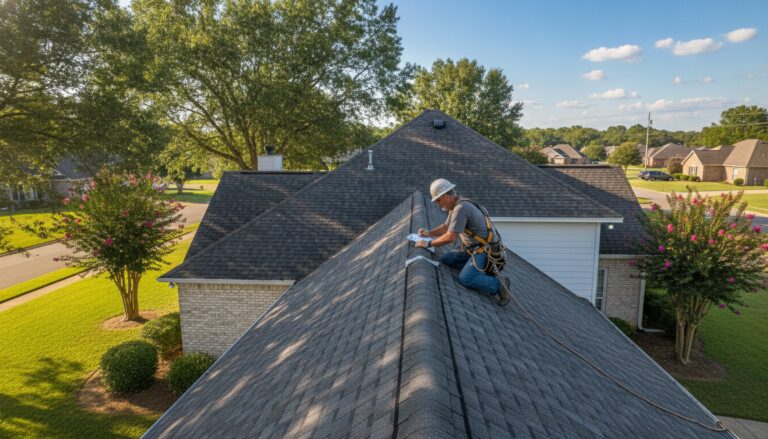
Before you file anything, schedule a free professional roof inspection. This is the single most important step in the entire process, and it’s the one most homeowners skip.
A qualified inspector documents:
- The specific damage pattern (hail impact marks, wind-lifted shingles, debris strikes)
- Whether the damage is isolated or widespread across the roof
- Condition of the underlayment and decking, not just the visible shingles
- Photo and written documentation with a clear date
Ultimate Roofing uses drone inspection technology for this, which produces a complete photo record of every section of the roof without anyone needing to climb it — useful both for your own records and for showing the insurance adjuster exactly what they’re evaluating.
Step 2: Review Your Policy Before You Call
Pull out your actual policy documents (or call your agent) and check:
- Your deductible amount, and whether it’s a flat dollar figure or a percentage-based wind/hail deductible (common in Mississippi, and often higher than the standard deductible)
- Whether your policy pays Actual Cash Value (ACV) or Replacement Cost Value (RCV) — RCV pays to replace the roof at today’s prices; ACV factors in depreciation for the roof’s age, which can mean a meaningfully smaller payout on an older roof
- Any exclusions specific to roofing (some policies have separate, more restrictive roof-damage clauses than the rest of the dwelling coverage)
Knowing these numbers before you file means you won’t be surprised by the settlement offer, and you’ll know if something looks off.
Step 3: File the Claim
Call your insurance company (or file online, if your insurer supports it) and report the damage. You’ll need:
- The approximate date of the storm
- A description of the damage
- Your independent inspection report, if you already have one
- Photos of the damage
Most insurers assign a claim number immediately and schedule an adjuster visit within a few days to a couple of weeks, depending on how many claims they’re processing after a regional storm event.
Step 4: Meet the Adjuster On-Site
This step matters more than most homeowners expect. Don’t just hand over keys and let the adjuster do a solo walkthrough — be present, or have your roofing contractor present, when the adjuster inspects the roof.
Ultimate Roofing regularly meets adjusters on-site for Southaven and DeSoto County storm damage claims, walking the roof alongside them and pointing to the specific damage documented in the independent inspection. Adjusters are handling a high volume of claims, especially after a widespread storm — a second set of eyes pointing to specific damage points reduces the odds that something visible gets missed or under-scoped in the adjuster’s report.
Step 5: Review the Settlement Offer Carefully
The insurance company will send a settlement offer — either an estimate for repairs or a full replacement authorization, depending on the extent of damage. Compare this line-by-line against your contractor’s independent estimate. Watch for:
- A scope that only covers “repair” when the actual damage pattern supports full replacement
- Material specifications that don’t match what’s actually on your roof (a downgrade from architectural shingles to 3-tab, for example)
- Underlayment, decking, or flashing work left out of the scope entirely
If your contractor’s assessment and the insurance settlement don’t match, that’s a normal part of the process, not a sign something’s gone wrong — it’s exactly why you got the independent inspection first. A documented gap between “what the adjuster’s report says” and “what’s actually damaged” is the basis for a supplement request.
Step 6: Request a Supplement If the Scope Doesn’t Match the Damage
If the settlement doesn’t cover the full, documented scope of repair, you (or your contractor, with your authorization) can submit a supplement request — additional documentation showing why the approved scope falls short of what’s actually needed. This is a normal, common part of the claims process, not a confrontational escalation. Most supplements are resolved with additional photos and a follow-up conversation, not a dispute.
Step 7: Schedule the Repair or Replacement
Once the claim is settled, get a written estimate and schedule the work. Confirm in writing what’s covered by insurance versus what (if anything) you’re paying out of pocket for upgrades, and get a clear timeline before work begins. See our roof replacement cost guide for typical pricing ranges across DeSoto County if you want a general sense of what full replacement runs before you’re comparing quotes.
What If a Storm Just Damaged Your Roof and You Haven’t Filed Yet?
If you’re dealing with active storm damage right now — before any of the insurance conversation has even started — read our companion guide: What to Do After Storm Damage to Your Roof, which covers the immediate safety and documentation steps that come before filing.
Ultimate Roofing has handled the insurance claims process for homeowners across Southaven, Hernando, Olive Branch, and DeSoto County from initial inspection through final payout. Schedule a free inspection any time — no pressure, no obligation, just an honest, documented assessment of what your roof actually needs.
Insurance Claim Questions
for Mississippi Homeowners
Most standard policies cover wind, hail, and falling debris as a covered peril. Damage from age, wear, or lack of maintenance generally isn’t covered, which is why a documented, dated inspection matters when you file.
Yes. An independent inspection documents the damage pattern before an adjuster evaluates it, giving you your own evidence to compare against the insurance company’s assessment rather than relying on it entirely.
Replacement Cost Value pays to replace the roof at today’s prices. Actual Cash Value factors in depreciation for the roof’s age, which can mean a meaningfully smaller payout on an older roof. Check which one your policy uses before you file.
You or your contractor can submit a supplement request with additional documentation showing why the approved scope falls short. This is a normal, common part of the claims process, not an adversarial escalation.
It’s recommended. A contractor present during the adjuster’s visit can point directly to documented damage, reducing the odds that something gets missed or under-scoped in a high-volume claims period after a widespread storm.
Need Help With a Roof
Insurance Claim?
We meet adjusters on-site and handle the process from inspection through final payout. Serving Southaven, Hernando, Olive Branch, and all of DeSoto County.